
A little bit about us.
Doing Good Things, Growing Good Food
Food production exists on a massive scale in California and the United States. It is impossible to compete with hyper-efficient mass production so why do we do what we do? And how do we make the choices we make? Our core beliefs are at the heart of every decision.
Our Core Beliefs:
Food is essential and feeding people must be the focus of our efforts
Our choices affect our community
Labor has value; all workers deserve a livable wage and access to a comfortable life
Our resources are best spent here at the farm and within our local community
Waste is inevitable and should be repurposed when possible
(Some) Practices That Reflect Our Values:
The products carried at the Red Barn Store are sourced from makers and farmers who share in our values
Crew members are welcome to OHF produce at no cost
Produce left over at the end of every week is donated to community organizations whose mission is to feed people (Extra Food, HAS)
Our soil is fed with compost and by-products of the meat and fish industries


Oak Hill Farm History
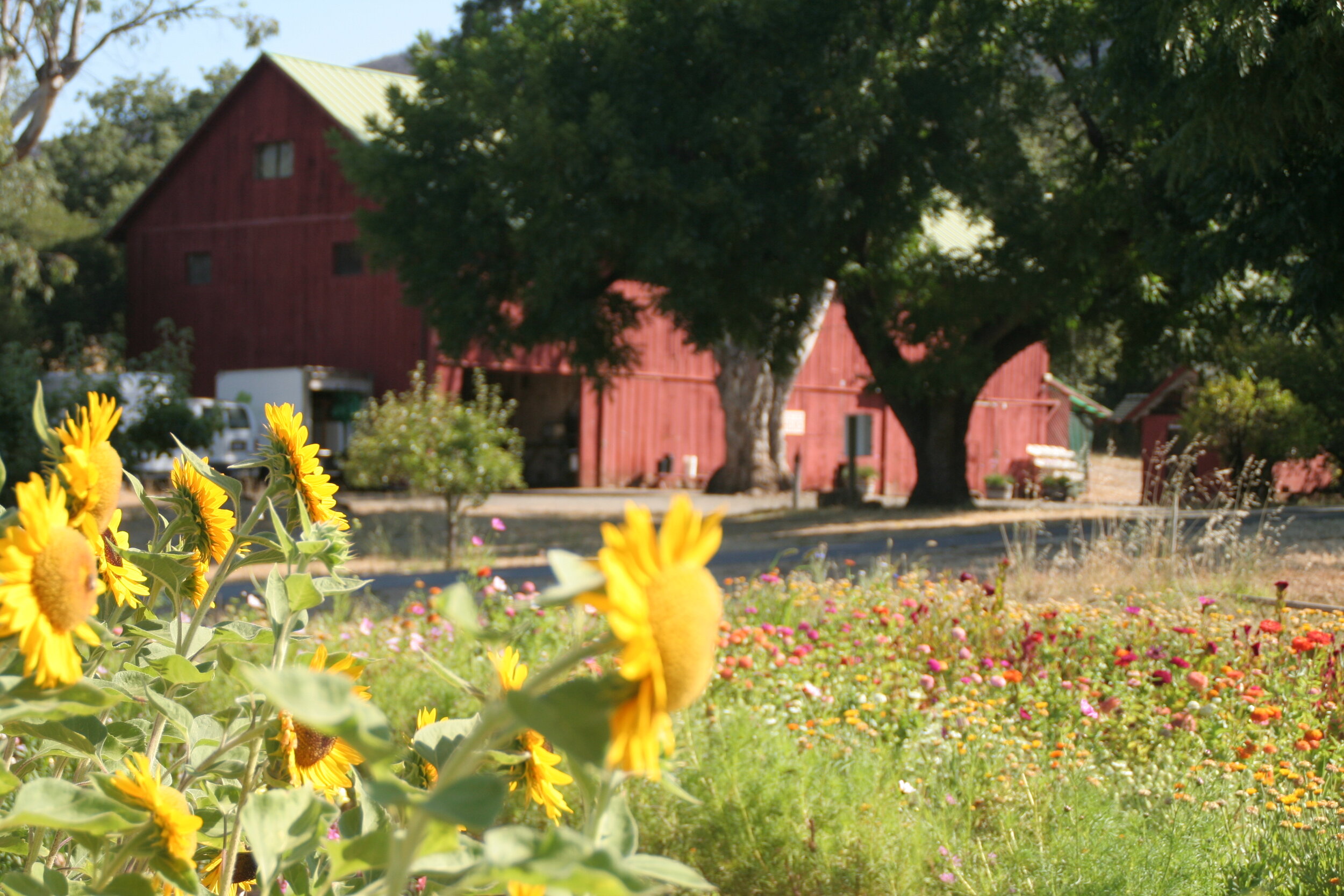
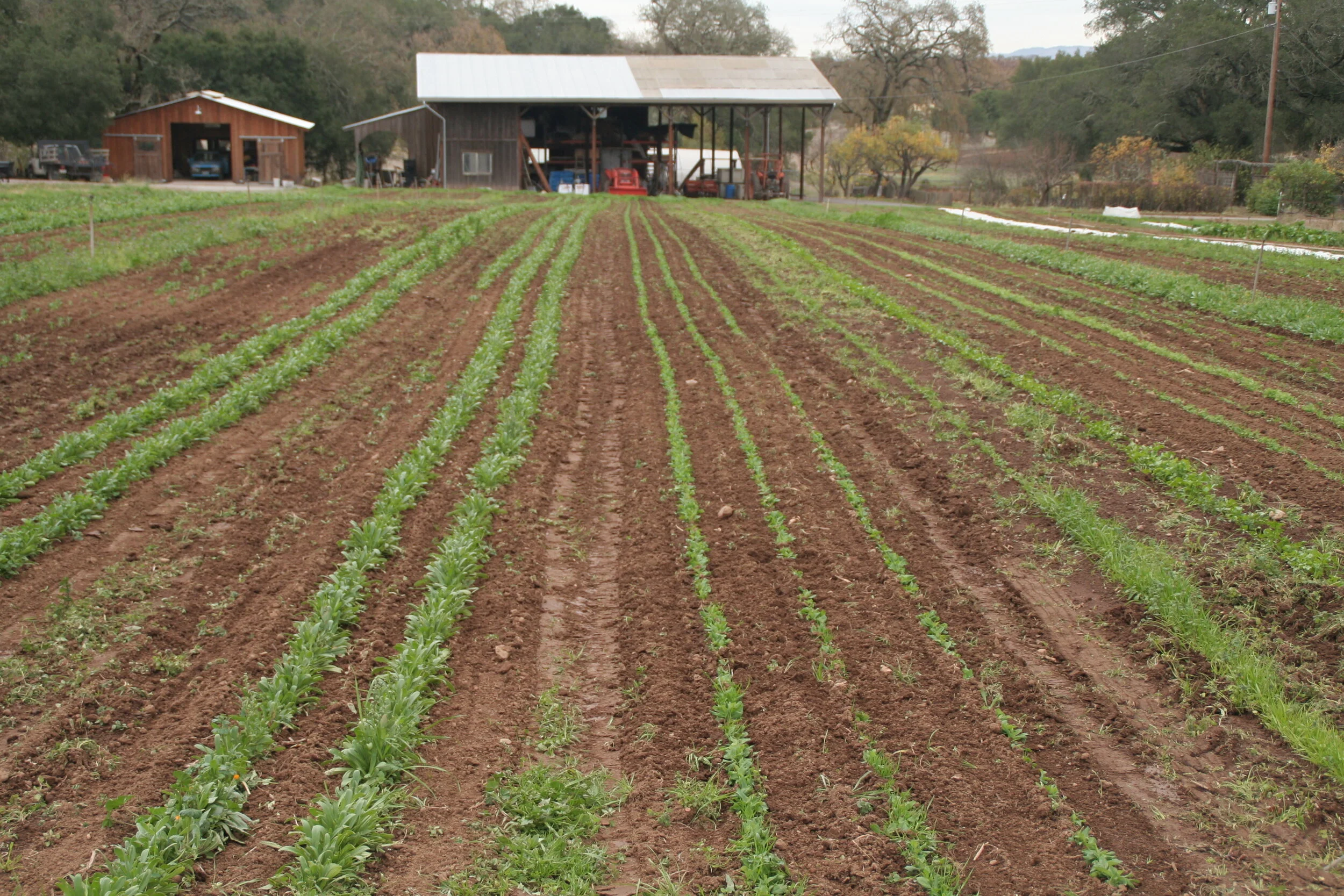
The land that is now Oak Hill Farm supported triblets of First Nations people before contact, as evidenced by lithic remains that occasionally rise up during plowing or tilling. We can only glimpse at the lives and cultures that passed through these lands. In the early 1900’s the land supported dairy cows and the Red Barn was used for milking.
The modern history of Oak Hill Farm cannot be told without spotlighting its founder Otto Teller, a long time resident of the Valley of the Moon. A bigger than life character, a great entertainer and storyteller, “Mose” as he was known left an impression on everyone who met him. Not one to suffer fools gladly, he had a short fuse, yet was unfailingly generous. Story has it that he moved to the Sonoma Valley in the mid ‘50’s because the fishing was good and the rivers and streams were full of rainbow trout.
Otto witnessed the collapse of the river systems and the toll that “modern farming” took on the environment. He was an agitator who could get the Secretary of Agriculture on the phone if he needed an influential ear. One of his biggest concerns was water use and the wastefulness of neighboring vineyards. He was appalled by the use of herbicides and pesticides, and embraced the emerging organic movement. He understood the sanctity of land and was a founding member of the Sonoma Land Trust. Oak Hill Farm was the first land in the Sonoma Valley to be placed in conservation easement, ensuring it will never be developed.
Mr. Teller started with sheep, but had no knack for the grind of ranching. He was more of an idea guy. A San Francisco florist friend asked Otto if he might grow some floral greens for him— the different varieties of greens found in a bouquet. Examples are eucalyptus, myrtle, euonymus, leptospermum, and ivy. Next time you get a bouquet notice how many varieties of green leafy plants are within!
Floral greens were a flourishing business for a few decades, and those fields of eucalyptus and myrtle still thrive at Oak Hill. In fact, we have so much myrtle that we used to ship to NYC for the Jewish holiday, Sukkot. Jorge Castañon and Chuy Soto grew the finest flowers, but as flower-buying habits changed, and the big Northern California flower markets began to shrink, Oak Hill Farm added vegetables to round out the business.
Anne Teller, Otto’s wife, was passionate about growing vegetables organically. Under her guidance Oak Hill was farmed by some of the best farmers in the valley—Paul Wirtz farmed Oak Hill for over a decade, followed by his intern, David Cooper. Anne's son Ted Bucklin ably managed the farm for many years before turning his attention to his wife's business, the Westerbeke Ranch. The farm has had many trials, and just as many errors—but a constant throughout has been the Red Barn Store located at the southern entrance.
Anne left us in 2019, and the next gen, Arden Bucklin-Sporer and Kate Bucklin are now at the helm, with the extraordinary expertise of the next-next gen, Melissa Bucklin, and Jimi Good- and the small but mighty crew that week after week attend to the planting, watering and harvesting of our crops.
Anne and Otto have left a legacy of inspiration and it is our intention to continue the important work that came before us.
15101 Sonoma Highway
Glen Ellen, California 95442
(707) 996-6643
oakhillfarmofsonoma@gmail.com
FAQs
We are not certified organic but we follow organic practices. Though we could qualify, the process of getting certified requires time, money, and energy that we would rather dedicate to our more immediate needs on the farm and in our community
Is your produce organic?
While we are known for our florals and wreaths, we have cut back on flower production as much as possible. Flowers require lots of water, diesel fuel, and a highly specialized skillset. While they are beautiful, they are resource heavy and do not align with our mission of feeding people first
Will you have flowers this season?
No, the majority of the farm is closed to the public. You are welcome to picnic and play by the Red Barn or join us on a Farm Tour!
Tours are free to join and meet in front of the Red Barn at 10am on the first Saturday of the month. Please wear closed-toe shoes and leave the dogs at home.
Can we walk around the farm?
We do! Email oakhillfarmofsonoma@gmail.com with inquiries and for more info
Do you wholesale your produce?
Our prices may seem high at times, but our margins are small. We decide what to charge based on market value and resources like time, fuel, water, and (most importantly) labor required to get each fruit or vegetable to your hands
How do you determine your prices?
Many crops are prone to visits from pests like worms, slugs, and beetles (our food is so delicious, can you blame them?)
Some farmers will exclude pests with plastic fabric or kill them altogether with insecticides. We forego any chemicals and as much plastic from the growing process as possible. We’d rather have beetle bites than deal with the consequences of plastic and chemicals on the land and around our food!